Clinics

Our Specialist Care Clinics provide targeted eye care for specific visual needs, helping patients of all ages achieve their best vision and comfort. Whether you’re looking to manage myopia progression or support children with specific learning difficulties, our expert team offers tailored assessments and treatments. Each clinic focuses on delivering personalised care, using the latest technology and evidence-based approaches to address your unique eye health concerns.
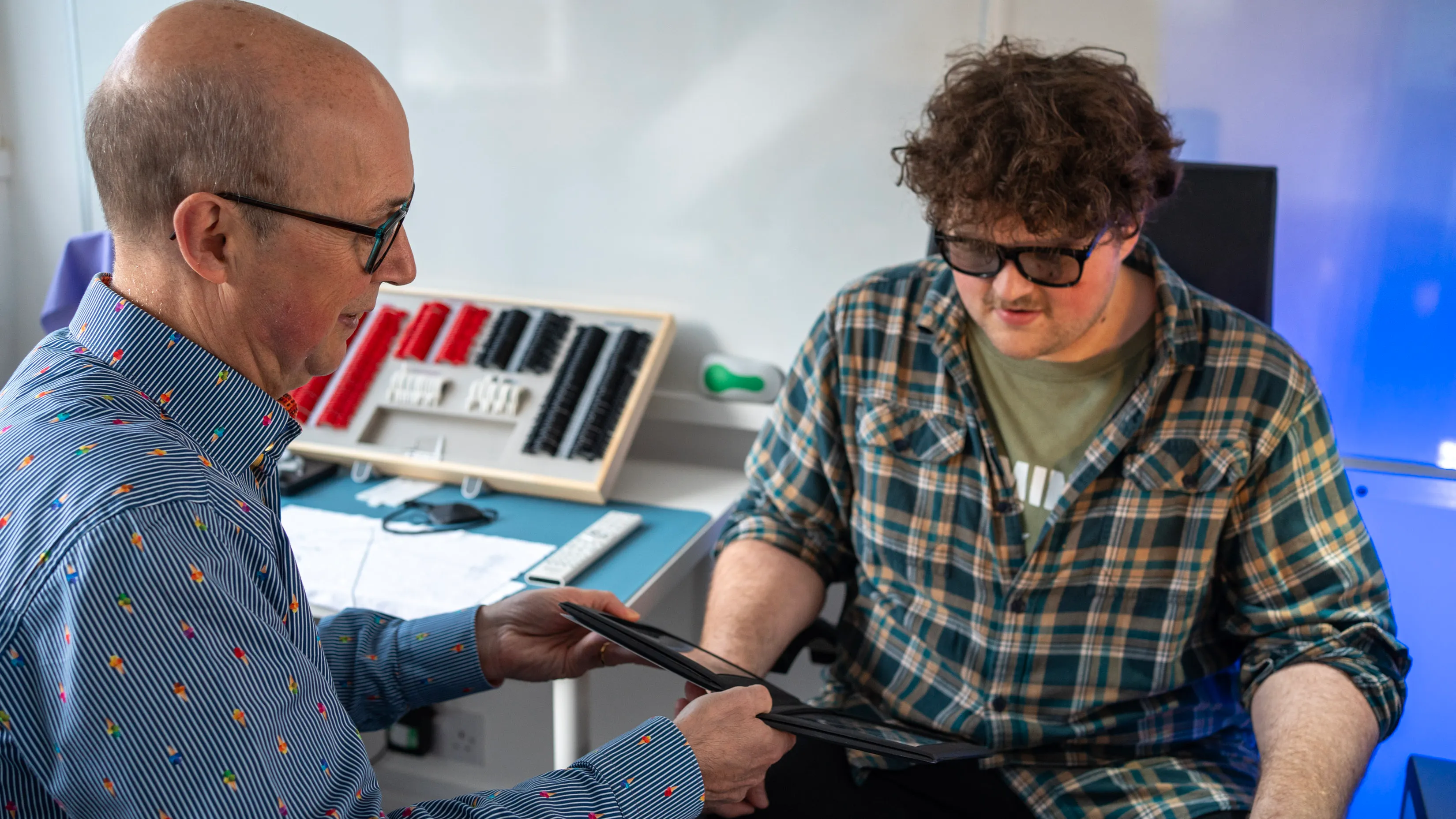
Two men collaborate in office, reviewing documents with color swatch board
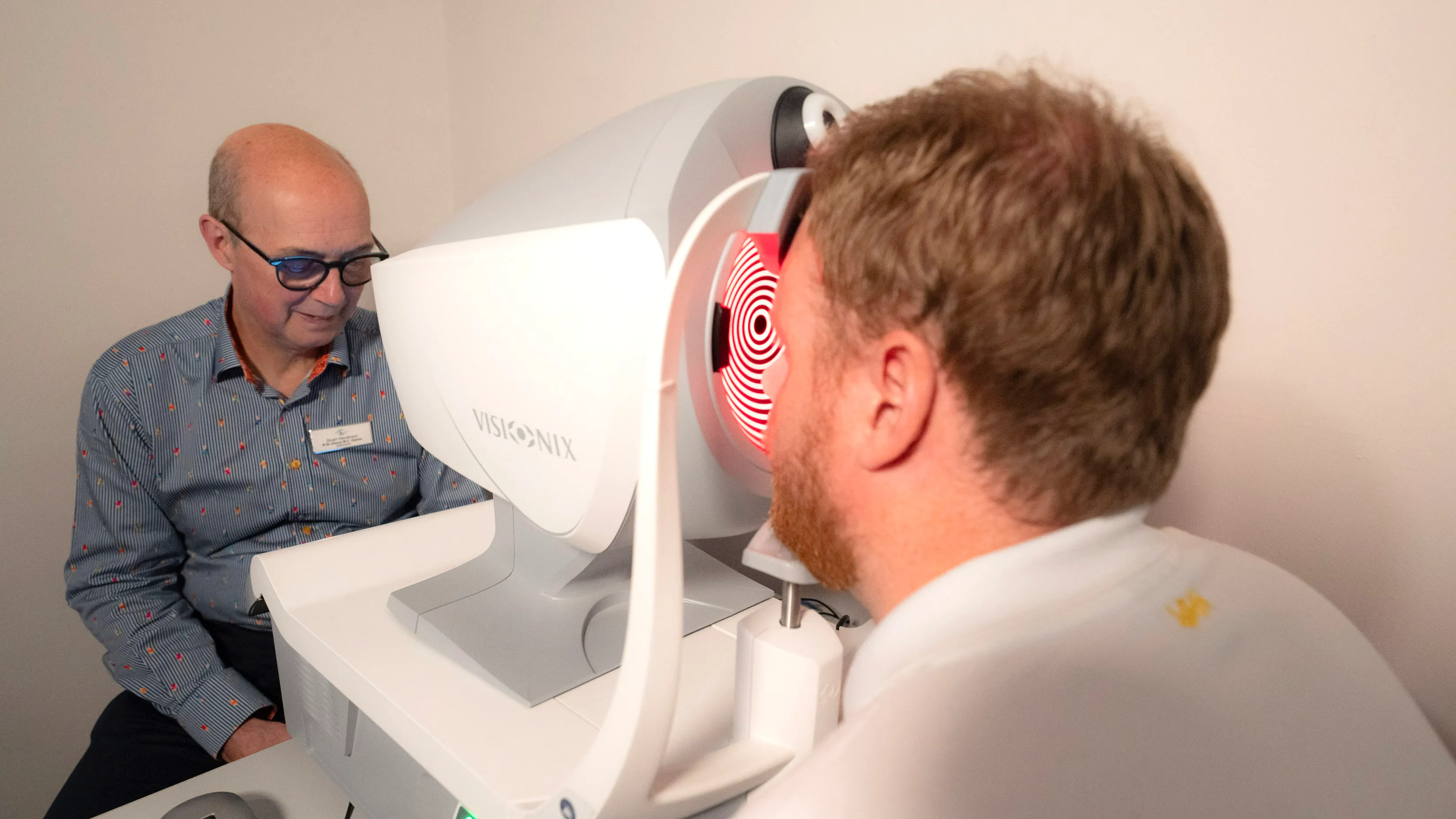
Eye examination using Visonix medical imaging device with red light
Specialist Clinic

Myopia Control

Ortho-K (Orthokeratology) is a safe and effective way to slow the progression of Myopia (short-sightedness). It involves wearing custom-made rigid contact lenses overnight, which gently reshape the cornea while you sleep. When removed in the morning, these lenses provide clear vision throughout the day without the need for glasses or daytime contacts. Ortho-K is comfortable to wear and does not interfere with sleep.

This treatment is particularly effective for children aged 8 and above, offering up to a 60% reduction in Myopia progression. It also benefits patients with mild dry eyes and reduces the risk of losing lenses during the day. Currently, Ortho-K is suitable for prescriptions between -0.75ds and -3.50ds, with a small degree of astigmatism, making it the preferred choice for managing Myopia in developing children.
Specialist Clinic

Specific learning difficulties (SLD) / VISUAL STRESS CLINIC

There is no single ‘Dyslexia eye test’—eye examinations cannot diagnose Dyslexia. However, our work, based on research by Dr. Bruce Evans and Arnold Wilkins, focuses on assessing the visual system to ensure the eyes are not contributing to reading difficulties or visual stress.

Our SLD assessment has four stages: an extended eye examination to rule out refractive issues, a binocular vision assessment to identify eye movement or convergence problems, testing with coloured overlays to see if specific tints improve reading, and a follow-up using an intuitive Colorimeter to determine the optimal tint for those who benefit. This careful, evidence-based approach helps identify visual factors affecting reading and guides interventions, with a detailed patient booklet available for parents and teachers.
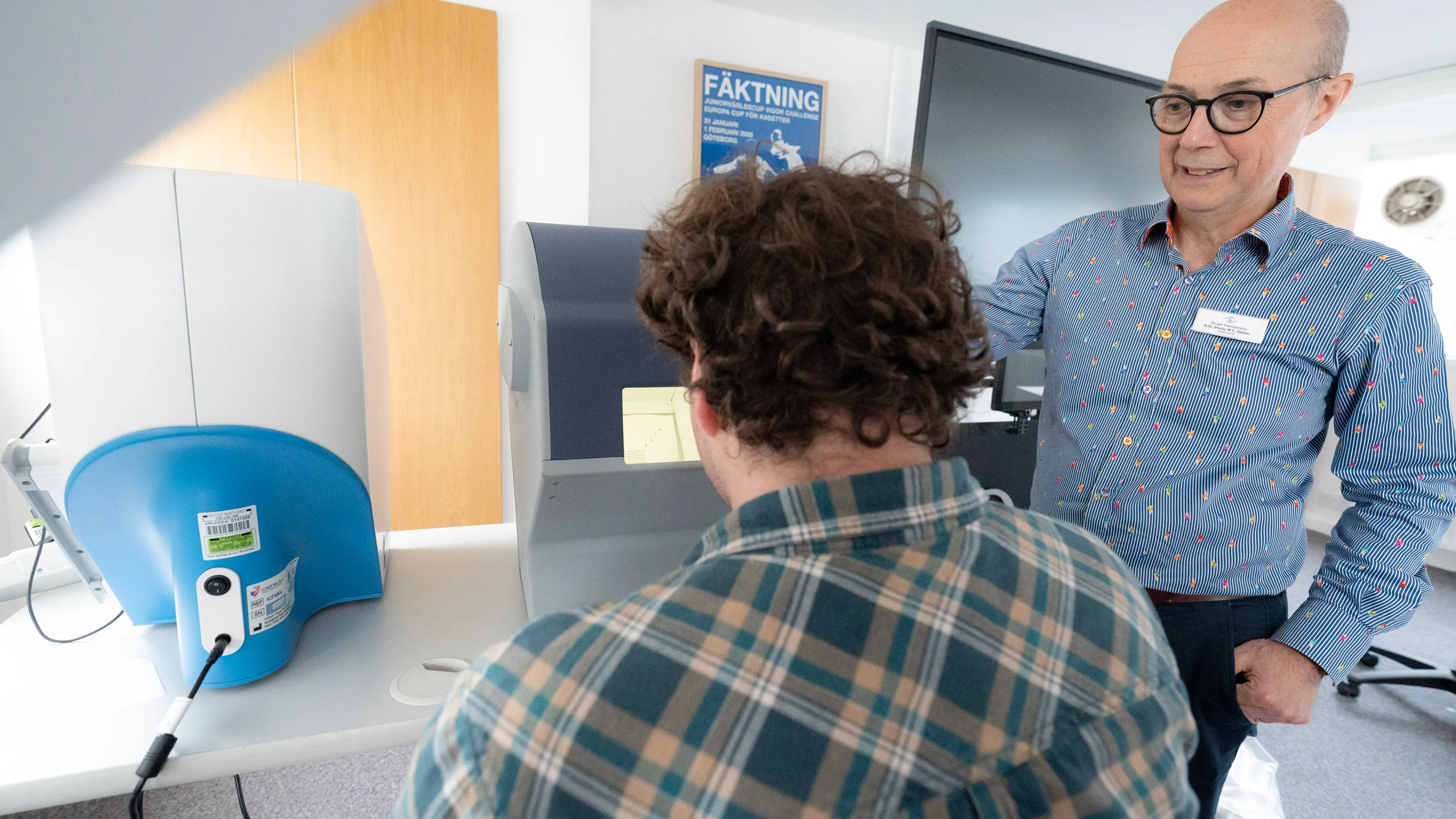
Smiling older man in glasses talking to person in plaid shirt near blue device
Two women working at desks with computers in modern office

BOOK AN EYE TEST

Visit us at our practice in Newcastle City Centre for your next comprehensive eye test.